
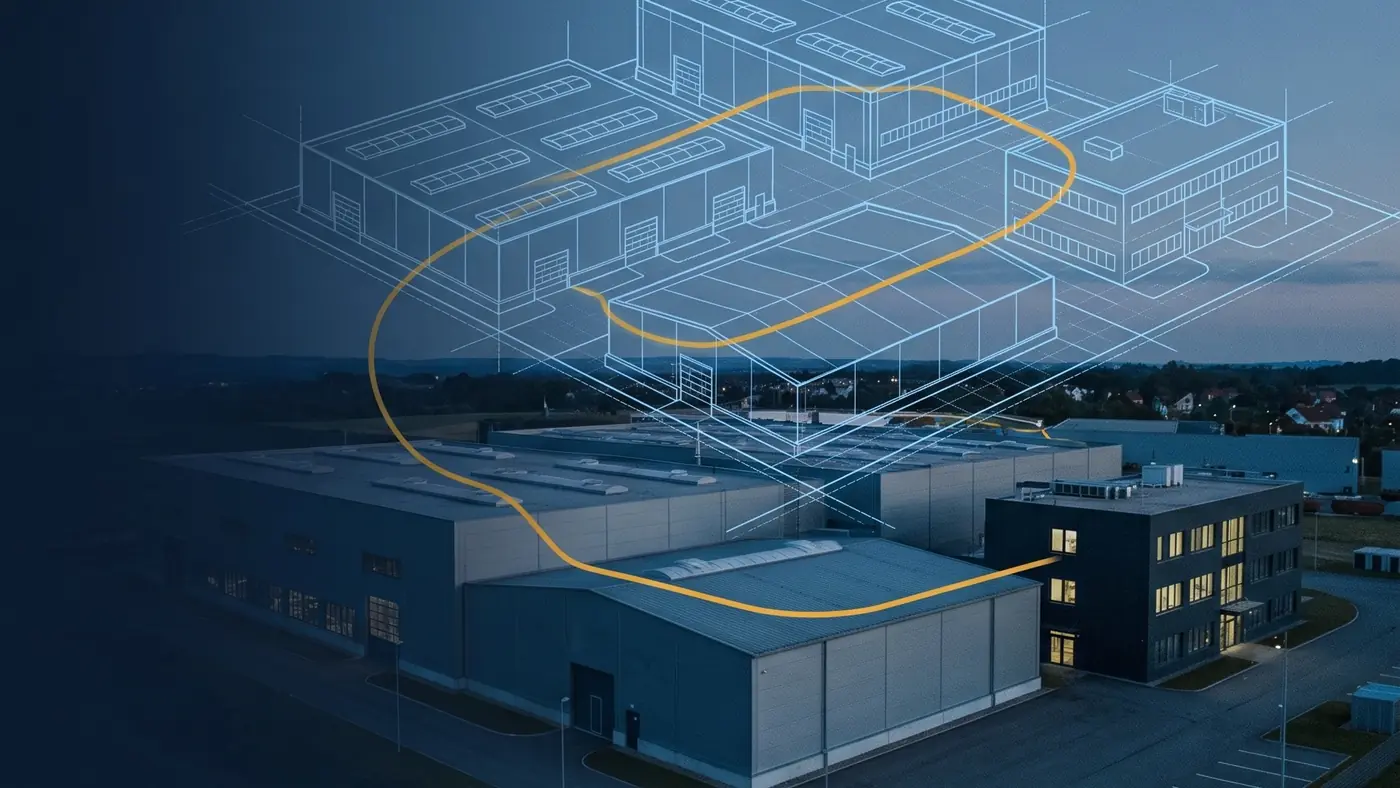
ISEE Chairman Stefan Stefanov has published an article with The Institute for American Manufacturing & Technology (IAMT) on what is really holding back the return of manufacturing to the United States. In his view, the shortage is less about skilled workers than about people who can design a plant as a complete system.
The original article
The Forgotten Trade Stefan Stefanov, IAMT, 10 November 2026
The missing link
Talk of reindustrialisation usually centres on investment, new plants and training technicians. Stefanov points to something that is rarely named: the ability to design an entire plant, from the product and the technology to the organisation, the costs and the results.
Today that ability is gained almost entirely through experience inside a single company, and it leaves together with the people who hold it. Medicine has anatomy, shared by every doctor. Mechanical engineering has its handbooks, with diagrams, formulas and a common vocabulary. The enterprise as a whole has no such foundation, and accounting, which often stands in for it, only records the past.
“The real missing input is a teachable model of the factory.”
Stefan Stefanov, The Forgotten Trade
Why there is still no such model
The article traces the attempts of the past 140 years. In 1886 Henry R. Towne urged the engineers of ASME to take up the management of the works. Then came Frederick Taylor’s scientific management (1911), the quality movement of W. Edwards Deming and the material requirements planning (MRP) of Joseph Orlicky and Oliver Wight. Each of these waves improved how existing plants run, yet none of them produced a complete model for designing a new plant from the ground up.
The author links this gap to the long decline of manufacturing employment in the United States: from 19.6 million people in June 1979 to about 12.6 million in 2026, or from roughly one in five to roughly one in thirteen nonfarm jobs. Measures such as the CHIPS and Science Act of 2022 bring the investment back, but not the knowledge of how to design the whole.
Three proposals
- A shared reference model of the factory. Developed under the leadership of ASME, funded through NIST and its Manufacturing Extension Partnership (MEP), and tested in pilot plants.
- Teaching through software and curricula. Students design entire enterprises with a digital twin of the business, in line with ABET accreditation requirements.
- A standard. The model becomes an ASME standard and part of the IISE industrial engineering curricula, and federal funding from the Departments of Commerce, Defense and Energy requires designs that meet the standard.
How it connects to the work of ISEE
The proposals follow the direction ISEE has been working in for years. The Business Model Ontology describes the principle setup and way of functioning of any enterprise, and the Business Digital Twin turns it into a tool with which a plant can be planned before it is built. This is exactly the experiment the institute presents at ASME IMECE 2026: a new factory, planned from the very start with the Business Digital Twin.
The full text of the article is published by IAMT.