
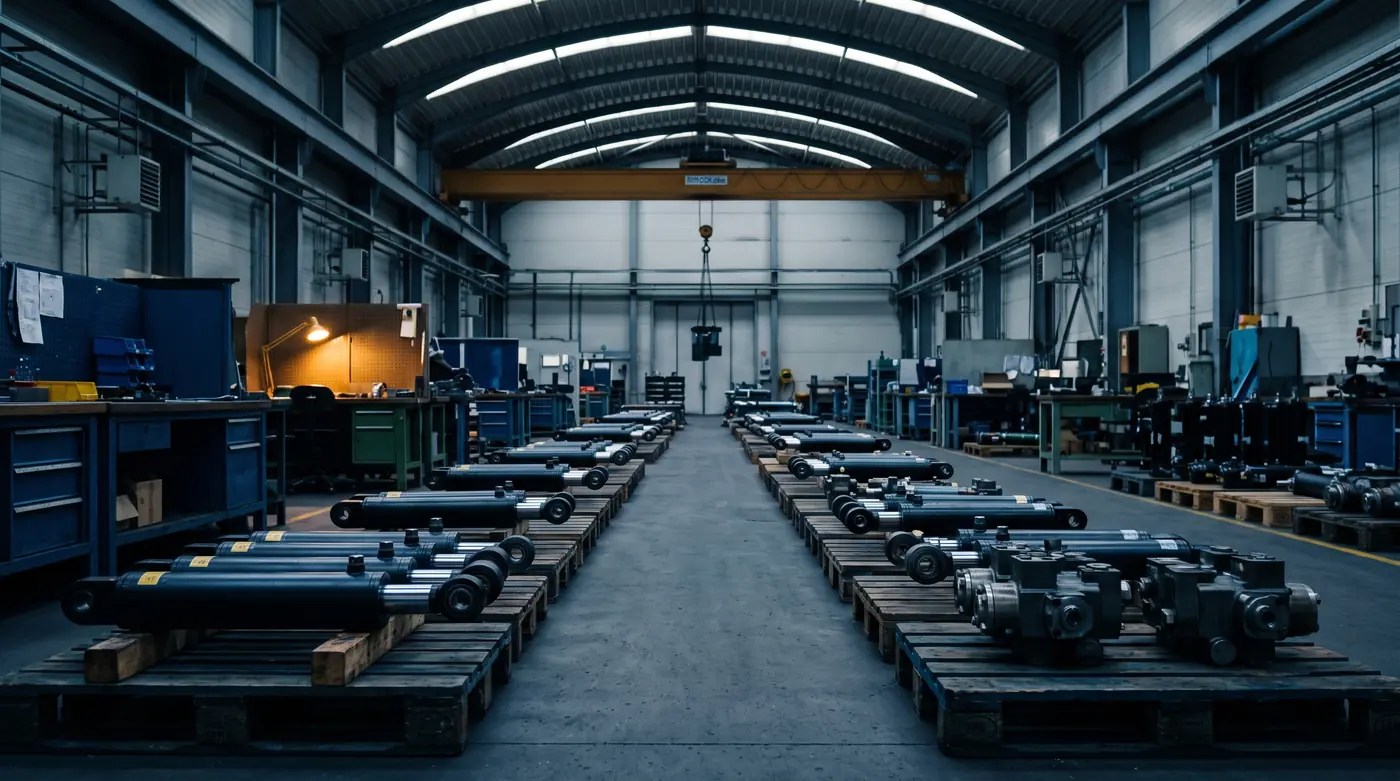
Implementation site: Hydraulic Elements and Systems PLC, Yambol, Bulgaria
Overview
Hydraulic Elements and Systems PLC (HES) is the primary laboratory-enterprise within the Applied Research Base of ISEE. Before the democratic changes of late 1989, HES operated with over 2,500 employees across four manufacturing sites. At that time, the company held over 20% of the global market for hydraulic cylinders used in electric and motor forklifts. However, by March 1997, HES was near bankruptcy, with only around 1,000 employees and an average salary of less than $10 a month. The technical environment was in a deplorable state.
The Experiment
In March 1997, Peter Bachvarov, a co-author of the Business Model Ontology (BMO), was elected CEO at HES. This marked the beginning of a transformative journey for the company, focusing on implementing the BMO and developing the Business Digital Twin software.
1997-2001: Initial Phase
- Recruitment and Training: HES hired 12 young machine engineers with minimal professional experience in 1997. By mid-1998, these engineers were introduced to the initial form of the holistic BMO.
- Development of BDT: An initial variant of the 1st version of ISEE’s Business Digital Twin was provided to these engineers, enabling digitalization of engineering developments to manage sales, production, and supply systems. The first version of the BDT was completed by the end of 2001.
2002-2003: First Campaign for Large-Scale Industrial Reengineering
- Restructuring and Relocation: Over 80% of all workplaces were restructured and relocated within 15 months, managed by those young engineers using the Business Digital Twin software.
- Focus on Engineering Developments: The engineering developments included labor norms, material limits, and “engineering organizational cost analyses” of products, all embedded in the Business Digital Twin.
2010-2011: Second Campaign for Large-Scale Industrial Reengineering
- Economic Crisis Response: Following the global economic crisis, a second reengineering campaign was launched, utilizing the 3rd version of the BDT system.
- Continued Improvement: This campaign saw over 70% of workplaces restructured and relocated, resulting in a more than twofold increase in production volume and diversity.
Outcome
The results of the two campaigns demonstrated a profound transformation at HES.
- Technical Environment Transformation: The state of the technical environment improved significantly from 1997 to 2011, with modernized equipment and processes. Before the implementation of BMO, the technical environment was outdated and inefficient, but by 2011, it had been transformed into a state-of-the-art facility. This included upgraded machinery and streamlined production lines, which greatly enhanced operational efficiency.
- Economic Growth: Sales increased substantially over the twenty-year period, despite the global economic crisis of 2008/2009. The holistic Digital Twin system enabled better resource management, cost control, and market responsiveness, which resulted in a steady increase in revenue. Even during economic downturns, HES managed to maintain growth by optimizing its production processes and expanding its market reach.
- Batch Size Reduction: The ability to engineer and manufacture products in small batches improved dramatically, enhancing flexibility and efficiency. Initially, HES operated with large batch sizes, which limited its ability to respond to market changes. By implementing the holistic Digital Twin system, the company was able to reduce batch sizes, allowing for more customized production runs and quicker turnaround times.
- New Product Implementation: The capability to introduce new products saw significant growth, from no new product engineering developments in 1997 to a robust system by 2011. The holistic BMO framework facilitated innovation by integrating product development with production and supply chain management. This seamless integration allowed HES to rapidly develop and launch new products, meeting evolving customer demands.
- Organizational Shift: The role of engineers evolved from servicing in 1997 to central management by 2003, reflecting a shift towards a knowledge-driven organization. The transformation involved not only technological advancements but also a cultural shift within the organization. Engineers became central to the decision-making process, leveraging their expertise to drive strategic initiatives and continuous improvement
Conclusion
The transformative journey of HES, powered by the holistic BMO and a holistic Digital Twin system, highlights substantial improvements in the technical environment, economic performance, and organizational structure. This case study underscores the efficacy of BMO in driving large-scale industrial reengineering and achieving sustainable growth. The success of HES demonstrates that with the right strategic approach and technological integration, even enterprises on the brink of failure can achieve remarkable turnaround and long-term prosperity