
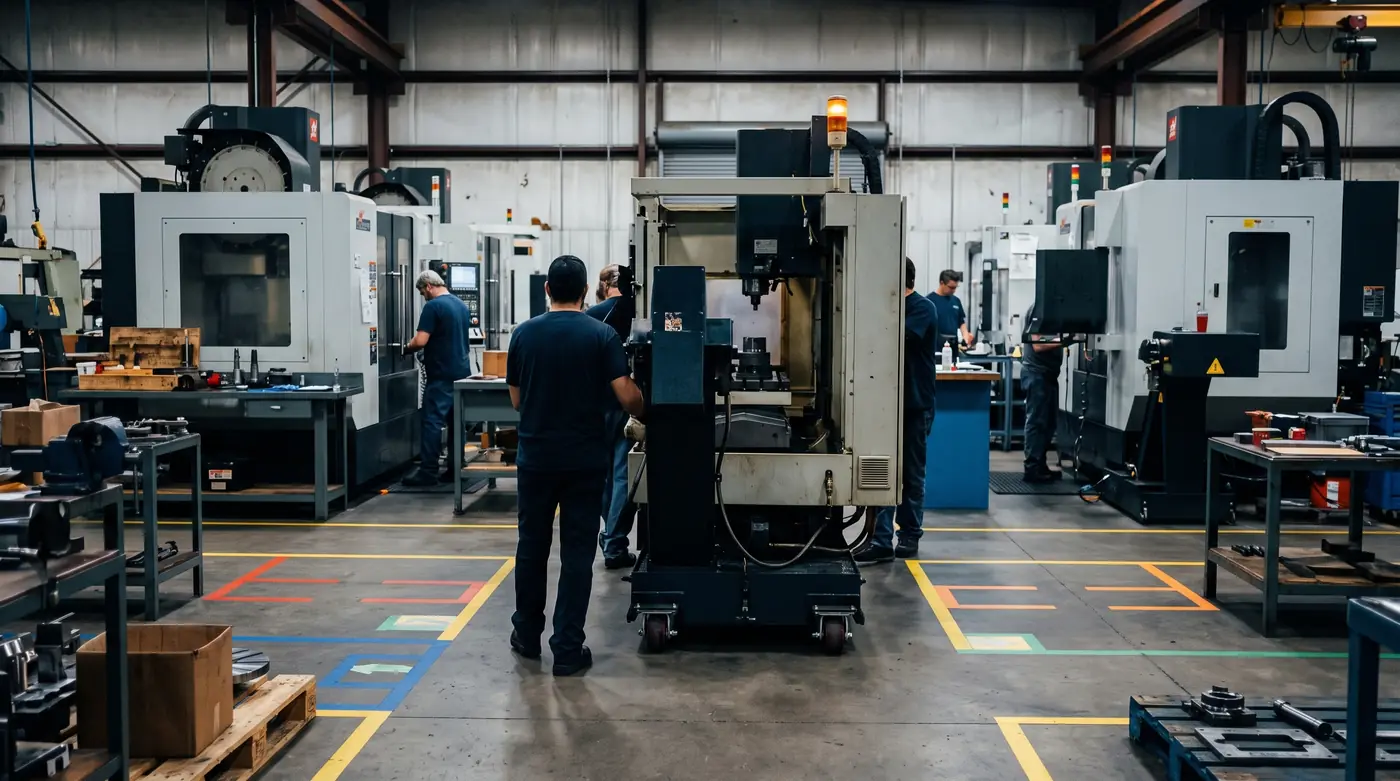
Implementation site: Hydraulic Elements and Systems PLC, Yambol, Bulgaria
Overview
ISEE has executed numerous industrial reengineering campaigns, with two major initiatives reshaping over 500 workplaces. The first of these large-scale efforts demonstrated the transformative power of the second version of the Business Digital Twin (BDT) system.
First Campaign: 2002-2003
The Experiment
The initial large-scale reengineering campaign was conducted over approximately 15 months, between 2002 and 2003, utilizing the second version of the BDT system. During this period, over 80% of all workplaces were restructured and relocated. Remarkably, the project was managed by several young engineers, each with less than three years of professional experience but highly proficient in using the BDT system for modeling technological environments and industrial processes.
Outcome
The campaign was executed swiftly and efficiently without any interruption to industrial processes. In fact, production volume and diversity increased during the reengineering process. The success of this campaign highlighted the effectiveness of the second version of the BDT system in managing and executing large-scale industrial transformations with minimal disruption.
Second Campaign: 2010-2011
The Experiment
Following the global economic crisis, ISEE embarked on a second large-scale industrial reengineering campaign from the spring of 2010 to the summer of 2011, utilizing the third version of the BDT system. During this period, more than 70% of all workplaces were restructured and relocated. This initiative was undertaken amidst challenging economic conditions, underscoring the resilience and adaptability of the BDT system.
Outcome
Despite the economic downturn, the reengineering campaign proceeded without delays or suspension of industrial activities. Production not only continued but accelerated, with a more than twofold increase in both volume and nomenclature. The campaign’s success was unprecedented, with ISEE’s studies indicating no comparable industrial reengineering effort in terms of investment efficiency and performance, achieved largely due to the advanced capabilities of the third version of the BDT system.
Conclusion
These two campaigns collectively demonstrate the BDT system’s unparalleled effectiveness in facilitating large-scale industrial reengineering, even under challenging circumstances. The evolution from the second to the third version of the BDT system showcased significant advancements in technology and methodology, enabling remarkable improvements in productivity and operational efficiency.