
Implementation site: Hydraulic Elements and Systems PLC, Yambol, Bulgaria and M+S Hydraulic PLC, Kazanlak, Bulgaria
Overview
Between 2013 and 2015, ISEE launched an experimental initiative to evaluate the capabilities of Business Model Ontology (BMO) as a knowledge that can cultivate outstanding engineering talent. The objective was to determine whether young engineers lacking prior managerial experience but well-versed in the BMO theory can establish and efficiently manage high-tech enterprises. The chosen venture for this experiment was centered around axial piston pumps and motors manufacturing.
The Experiment
In 2008, HES Plc., a manufacturer specializing in hydraulic cylinders and a company fully involved in testing BMO management, acquired outdated technical documentation for axial piston hydraulic motors and pumps, along with some of the necessary machinery for finishing operations, all obtained as scrap. These components had been originally purchased by socialist Bulgaria in the 1980s for USD 40 million as an attempt to kickstart a new high-tech production of axial piston hydraulic motors and pumps, a venture in which socialist Bulgaria invested a huge amount of effort. However, following the collapse of the political regime in 1989, the project was abandoned without reaching a functional prototype. By the time of the acquisition of the components by HES Plc., the equipment and the documentation were obsolete. Therefore, the experiment aimed to demonstrate that the Business Model Ontology, developed by the Institute for Systemic Economic Engineering, along with its accompanying Business Digital Twins software, which is based on it, could be used as a foundation for the creation of higher-quality human capital capable of building, managing, and developing high-tech industrial enterprises or reengineer existing ones.
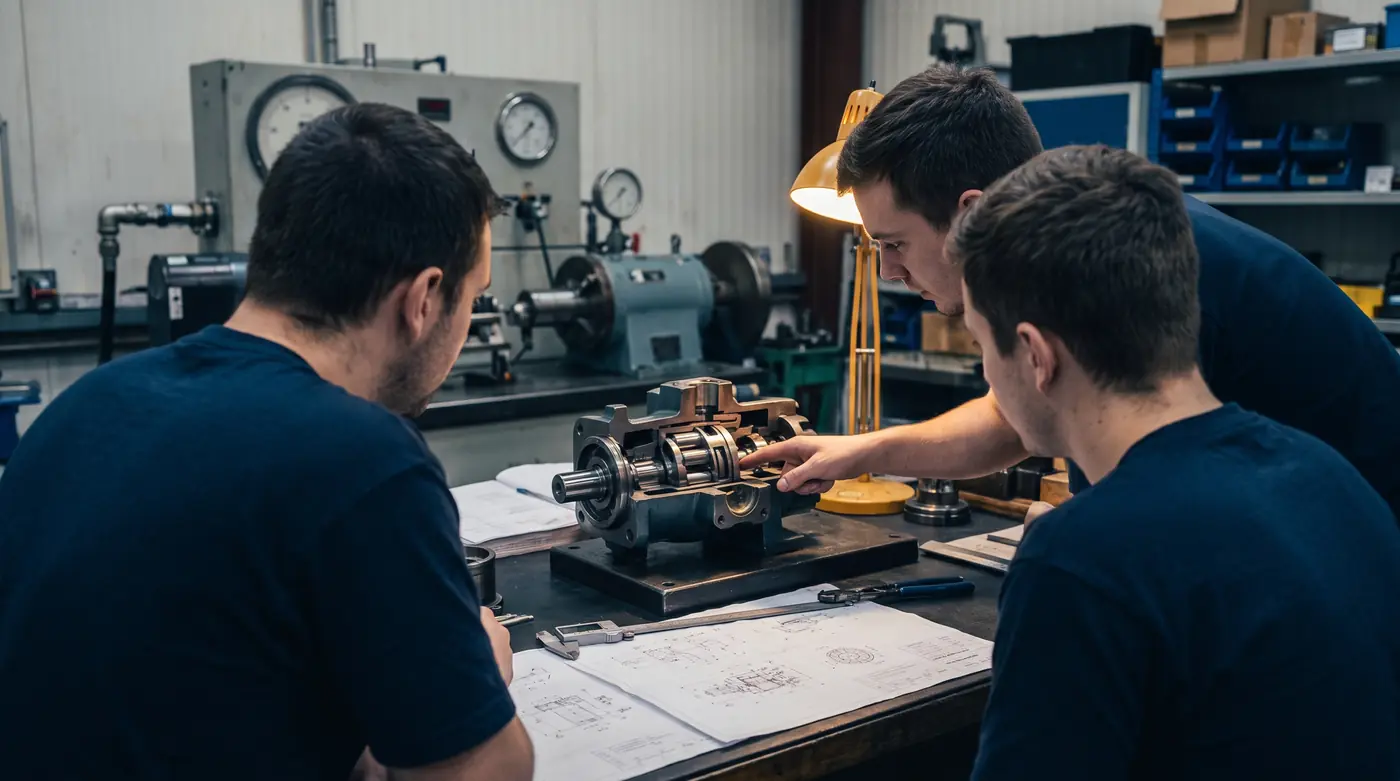
Three engineers aged 20, 23, and 28, with no prior enterprise management or even team management experience, were tasked to create a business for the high-tech products axial piston hydraulic motors and pumps. This involved modernizing the technical and constructive documentation, planning a whole new factory, engineering all internal processes, establishing the factory, creating work, and ultimately producing a working prototype.
It should be noted that until that moment HES plc, was accustomed to 0.01mm tolerances in its hydraulic cylinder production, which meant that the engineers were faced with the challenge of adapting to the tighter 0.001mm tolerances required for piston motors and pumps. This endeavor represented a significant leap into high-tech territory for the company, and was given to a young team with no prior management experience but with deep Business Model Ontology understanding.
Outcome
Within two years, the team of three engineers successfully planned and designed the production process and the factory layout, created engineering drawings and developed training materials for workers, created the factory, and trained six new workers. Their effort culminated in the creation of a working prototype. The produced prototype was sent to a German test laboratory, where it outperformed and gave better results than the competitive models of Bosch Rexroth. Remarkably, the team of three engineers achieved this with a minimal investment of 0.75 million USD, contrasting starkly with Bulgaria’s previous multimillion dollar and multi-year attempt that involved a team of one hundred individuals. Furthermore, when inquiries were sent to foreign experts in the field, they quoted nearly 1 million USD to update the technical and constructive documentation, which highlights the success and cost-effectiveness of enterprise creation when engineers implement the BMO principles.