
- Home
- Business Model Ontology
Business Model Ontology
Business Model Ontology (BMO) is a comprehensive knowledge of the structural organization, functioning, and necessary cognitions of business enterprises.
The foundation of the Business Digital Twin
The scientific foundation of Business Model Ontology also enables the creation of Business Digital Twin software, as it provides a complete understanding of the anatomy and physiology of an enterprise based on which allows for the creation and development of enterprise-specific managerial models of the economy in all three dimensions – Strategic, Tactical, and Operational.
This Business Model Ontology recreates the universal principle setup and way of functioning of every enterprise as a systemic object and systemic subject through two cognitive platforms: the Industrial Cross and the Industrial Cognition Tree.
Three management dimensions
Two cognitive platforms

Human Model Ontology
anatomy and physiology of the human being
Business Model Ontology
setup and functioning of the enterprise
The Industrial Cross
The Industrial Cross explains an enterprise as a systemic object comprised of five technological systems that incorporate numerous and various specific objects and processes. The Industrial Cross defines all elements of an enterprise, their relationships, and properties, allowing for their modeling and the modeling of the industrial result in the three management dimensions. The first cognitive platform provides knowledge for understanding of an enterprise for machines as a systemic object, which exists through its economic result, which extends over time and can be positive (profit) or negative (loss).
The Industrial Cognition Tree
The Industrial Cognition Tree provides comprehensive knowledge management understanding through hierarchically and meaningfully structuring all enterprise-specific cognitions. It explains an enterprise as a systemic subject possessing cognitions and enables management of the cognitive base (brain) of the enterprise.
How we got here
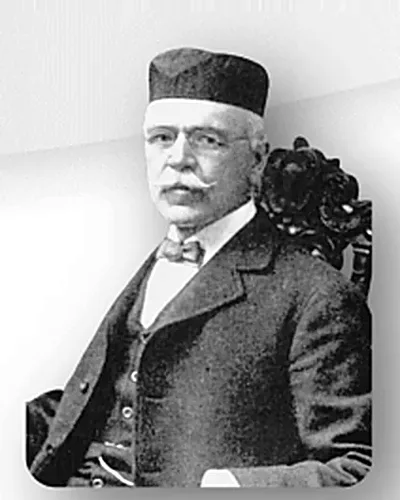
1886
Henry R. Towne
- 8th president of ASME
ReportThe Engineer as an Economist
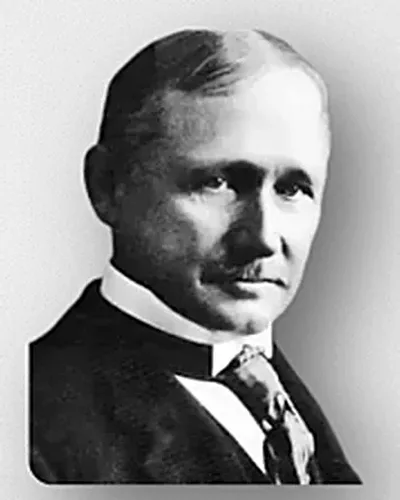
1890-1910
Frederick W. Taylor
- 25th president of ASME
- Father of Scientific management
- Operational modeling of processes in the enterprise
BookThe Principles of Scientific Management
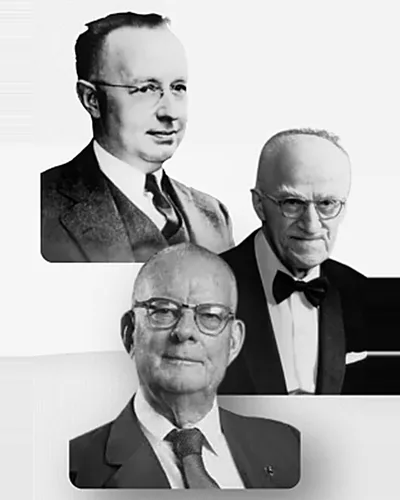
1930-1950
William DemingJoseph JuranWalter Shewhart
- Total quality-control management theory
- Trajectory optimization
- Deming's flow diagram
- Lean Manufacturing
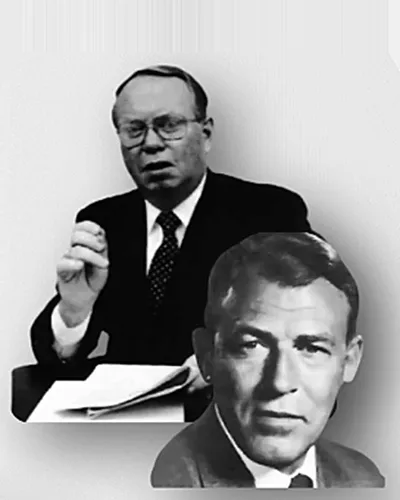
1970-1990
Joseph OrlickyOliver Wight
- MRP I and MRP II
- Creators of the Manufacturing Resource Planning algorithm

1998-2018
Peter BachvarovISEE
- Principle of operation of the enterprise - BMO
- Creation of BDT software based on the previous developments
BookTheory of Business Model Ontology
- ISEEInstitute for Systemic Economic Engineering
The future
Institute for Systemic Economic Engineering
- Education
- Strategy for dissemination
- Strategy for management standardization system
Where to go next
Experiments
Unlike traditional consultancy practices or software integrations, our experiments have consistently yielded exceptionally high returns on investment (ROI).
To the experimentsScience and Education
Over the past two decades, ISEE has undertaken major research projects specifically focused on educational and research systems and their contributions to economic knowledge development.
To the research areaCourses
In today’s rapidly evolving industrial landscape, success requires more than an idea – it demands a systemic engineering approach to managing resources and processes, understanding markets, and creating sustainable value.
To the coursesWant to learn BMO in practice?
Through the framework of Business Model Ontology (BMO), these workshops and courses will introduce the participants to a revolutionary way of thinking about business planning and management based on engineering principles.